


30 Oct Food product coding: what it is and what it is used for
Product coding is critical to the safe, efficient and globalised operation of the food industry. In a globalised and digitalised market, accurate information and traceability are essential requirements for any company that aspires to operate with guarantees in the supply chain.
From manufacture to the point of sale, products travel a long way during which they must be identified unambiguously, quickly and securely. This is where product coding comes into play, with the aim of assigning a unique code to each product.
This maxim is known as the coding principle or principle of non-ambiguity, which establishes that each item variant must have a unique code that identifies it and that two different products cannot be identified with the same code. These two premises form the basis of the GS1 international standards, which enable the identification, capture and sharing of information on products, assets, services and locations, among other things.
It is a common language for all businesses and throughout the supply chain, ensuring that information is accessible, accurate and easy to understand. It is known as GS1 standards because GS1 is the name of the international non-profit organisation that develops these global standards for identification, information exchange and automation of logistics and commercial processes. Thanks to these systems, millions of companies around the world can speak the same language when it comes to products, locations or logistics units.
This is essential work, as standard identification allows for the automation of logistics processes such as receiving, inventory, and picking g; facilitates traceability throughout the supply chain, ensuring transparency and food safety; enables compliance with regulatory requirements for domestic and international customers in export; and connects the physical world with the digital world.
Without coding, the commercial flow would be slower, more expensive and prone to errors. That is why it is essential that you understand how it works. In this article, we will explain what types of codes exist, what each one is used for and how they are correctly assigned. And at the end, we will give you a practical example of coding a real product.
GTIN CODES
GTINs (Global Trade Item Numbers) are the basic element of identification in GS1 standards. They allow any commercial unit to be uniquely identified, whether consumer products or units designed for distribution, in any market worldwide.
The type of GTIN assigned depends on the product’s destination and commercial presentation: GTIN-13, GTIN-14, GTIN-8, GTIN-12, etc.
GTIN-13
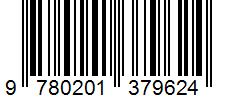
The GTIN-13 is used to identify all products intended for sale to the end consumer in European retail. It has 13 digits and is mainly used for consumer products in Europe.
It is the most visible in everyday life because it is what we see on product packaging on supermarket shelves. We commonly refer to this as the product barcode, and it is sometimes referred to as EAN 13. However, this is not entirely correct, as the product barcode is made up of two elements: the GTIN-13, which is the number, and the EAN-13, which is the barcode (the black lines).
GTIN-14
The GTIN-14 is used to identify commercial units for general distribution and logistics management, such as boxes, packs or higher product groupings. These are units that facilitate logistics management or transport, such as boxes or pallets. It consists of 14 digits and is generated from the GTIN-13 of a unit product to identify its higher logistics grouping.
So, what is ITF-14? It is simply the graphic form in which the GTIN-14 number is printed so that it can be scanned.
GTIN-8
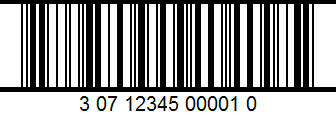
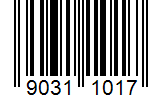
The GTIN-8 is used to identify very small items intended for sale to the end consumer and whose available space on the packaging does not allow a GTIN-13 to be printed with the minimum quality required by standards.
An item could be identified with a GTIN-8 if it meets any of the following criteria:
-The total area of the product packaging to be printed is less than 80 cm2.
-The area of the largest label on the product is less than 40 cm2.
-The product is cylindrical and its diameter is less than 30 mm.
GTIN-12 or UPC
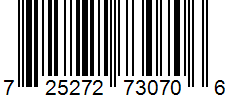
The GTIN-12 or UPC is the equivalent of the GTIN-13 for the US and Canadian markets. Its function is the same: to identify all products intended for sale to the end consumer. In this case, its structure consists of 12 digits, although, like the GTIN-13, it also has a compressed version for small packages that has 8 digits.
GS1-128 CODES
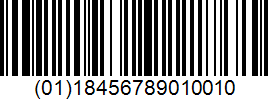
GS1-128 is one of the symbologies used by GS1 Standards for the coding of logistics groups such as pallets, as it allows various types of information to be represented in a concatenated form.
It is structured using Application Identifiers (AI). These are two or more digit numerical prefixes enclosed in brackets that denote the type and format of the data that follows. E.g.: 02 is the GTIN of the items contained, 10 is the batch number, 11 is the production date, 15 is the expiry date, etc.
GS1-128 is probably the most widely used symbology in the logistics environment of the entire value chain within the GS1 system. It is a linear symbology and is widely used for the coding and identification of logistics groupings. Its main feature is its ability to represent various data in a concatenated form, which in turn facilitates traceability and automation in the warehouse.
SSCC CODES
The SSCC (Serial Shipping Container Code) uniquely and exclusively identifies shipping logistics units: pallets, containers or individual logistics boxes. It does not identify the product inside. It consists of 18 digits and acts as the “registration number” of the package in the supply chain.
An individual SSCC is a unique 18-digit number that remains the same throughout the life of the logistics unit to which it is assigned. An individual SSCC number should not be reassigned until one year after the date of shipment.
The SSCC allows for complete traceability of each logistics unit. It is usually communicated via EDI messages, in which commercial documents such as invoices and purchase orders are exchanged between companies in an automated and standardised manner. This provides detailed information about the logistics package.
TWO-DIMENSIONAL CODES
Two-dimensional codes can store large amounts of information in a very small space. They can be read quickly and reliably thanks to their location pattern. In these codes, data is encoded using a series of dark and light modules of a predetermined size. Within the GS1 system, there are several accepted and used symbologies, depending on the sector or type of application. The most commonly used are GS1 QR and DataMatrix.
GS1 QR
GS1 QR is a restricted symbology for applications where the code is not intended to be read by value chain readers, such as those at a supermarket point of sale. In other words, it should not replace other symbologies.
It is simply an “extra”, as it allows consumers to access additional digital information such as web content, product sheets or traceability and transparency plans.

GS1 DATAMATRIX
GS1 DataMatrix is one of the most widely used symbologies in the GS1 system, as it can contain a large amount of information. In addition, it can be read in any orientation and maintains decoding even when damaged or poorly printed. It can encode dates, batches, identifiers and other critical data in a very small space, making it a key tool for product control and safety.
This symbology is used primarily in the healthcare sector, as its small size and large data capacity allow it to contain all the additional information about the device or medicine in a very small code. However, it is also widely used for traceability applications where a large volume of information needs to be represented and where, in contrast to a linear code, it would be necessary to use several lines of code.
