


12 Aug How is the structure of the food retail sector organised?
The food retail sector is one of the most dynamic and complex in the commercial landscape. Its structure is shaped by multiple factors that condition both the shopping experience and business strategy.
In this post we explore how this sector is articulated according to three main axes: the commercial format, the sales channel and, especially, the business model that supports it.
Understanding these keys is essential for analysing market behaviour, identifying trends and anticipating the movements of the main players in the sector.
Structure of food retailing according to commercial format
– Hypermarkets: these are large supermarkets with more than 2,500 m², offering a wide range of food and non-food products and are usually located in peripheral areas or shopping centres. Large supermarkets gaining market share are currently from small supermarkets.
– Supermarkets: are medium-sized (between 400 and 2,500 m²), have a high turnover of food and household products and are present in urban or neighbourhood areas.
– Proximity or convenience stores: are small (less than 400 m²), have extended opening hours, are close to the consumer and are focused on fast and frequent shopping.
– Traditional / specialised shops: these are butchers, bakeries, greengrocers… They offer personalised service and local or fresh produce. Although they are losing presence to the large chains, they are still relevant.
– Municipal and street markets: these are traditional channels with a strong local presence focused on direct sales by small producers or traders.
Structure of food retailing according to sales channel
– Physical: allows direct contact with the product. Despite the advance of online, it is still the majority.
– Online: food e-commerce with models such as home delivery, click & collect or subscriptions.
– Multichannel and omnichannel: the result of hybrid strategies that integrate physical and online shops to improve the customer experience.
Food retail structure according to business model
– Integrated chains
– Franchises
– Co-operatives
– Purchasing centres or distribution groups
– Cash & carry
– Pure players
– Hybrid models
INTEGRATED CHAIN
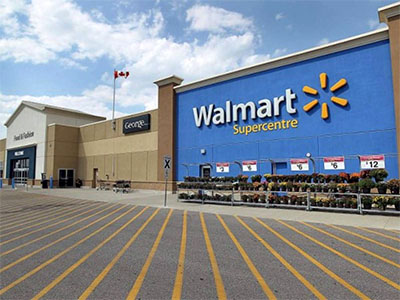 Integrated chains are those food retail companies that have centralised and unified control over all aspects of the business, from purchasing and procurement to commercial policy, pricing, marketing and point-of-sale management.
An integrated chain is characterised by direct shop ownership, centralised management and a single, consistent brand strategy. In addition, they have high operational efficiency in terms of cost, margin and process control. They also make intensive use of technology and data to optimise assortment, pricing and distribution.
Integrated chains have a high penetration of own brands (private label), which generate higher profitability. They achieve this by taking into account numerous requirements for choosing the manufacturer of their private labels and by developing a good pricing strategy for their private labels.
Integrated chains are less dependent on intermediaries or third parties. However, they are less flexible to adapt quickly to very diverse markets and pose a high financial risk if the model fails in one country or market.
Globally, these are the top 10 leading integrated chains in the world. Many of them are also major players in FMCG retailing.
| Company | Country | Presence | Characteristics |
| Walmart | USA | Worldwide | The world’s largest fully integrated retailer |
| Costco | USA | Worldwide | Hybrid B2C/B2B model with full control of the business |
| Schwarz Gruppe ( Lidl and Kaufland) |
Germany | Europe, USA, Asia | Strongly integrated with focus on efficiency |
| Kroger | USA | USA | Own chains and private label production |
| Aldi | Germany | Europe, USA, Australia | Integrated discounters |
| Carrefour | France | Europe, LatAm, Asia | Although it has franchises, its core is still integration |
| Tesco | United Kingdom | Europe, Asia | Highly integrated at home and direct operations abroad |
| Mercadona | Spain | Spain, Portugal | Exemplary vertical integration |
| Ahold Delhaize | The Netherlands | Europe, USA | Chains such as Albert Heijn or Food Lion integrated |
| Aeon | Japan | Asia | Full control in Japan and expansion in South East Asia |
FRANCHISES
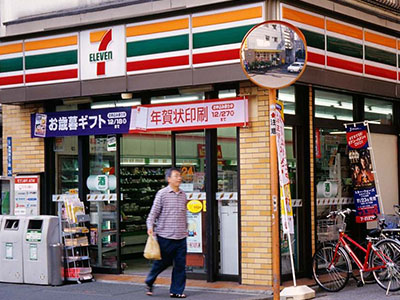 Franchises are a business model in which a company (the franchisor) transfers the use of its brand, its business model and its know-how to a third party (the franchisee) in exchange for a fee or percentage of sales. In food, this model allows rapid growth with less direct investment by the parent company.
In this structure, the franchisor also provides training and the supply of products while maintaining some control over the image, commercial policy and assortment. And the franchisee owns the point of sale, invests capital, manages the premises and hires the staff.
Franchising allows for rapid expansion with less financial risk for the franchisor. However, this model offers less control over shop execution, presents a risk of variability in service quality and may involve potential conflicts over profitability or strategic decisions.
Globally, this is the top 10 leading franchises in the world.
| Company | Country | Business Model | Presence |
| 7-Eleven | USA / Japan | 100% franchised | Worldwide (Asia and America) |
| Carrefour Express | France | Mixed | Europe, LatAm, Asia |
| Circle K | Canada / USA | Franchise + own | Global, very strong in North America |
| SPAR | Netherlands | Licence / franchise | Europe, Africa, Asia |
| FamilyMart | Japan | Mostly franchising | Asia |
| Lawson | Japan | High franchising | Japan, China |
| DIA | Spain | Mixed, high franchise presence | Spain, Portugal, Brazil, Argentina |
| AMPM | USA | 100% franchised | America |
| Go Mart | Mexico | Mainly franchises | Mexico |
| Netto Marken-Discount | Germany | Partial franchise | Germany |
COOPERATIVES
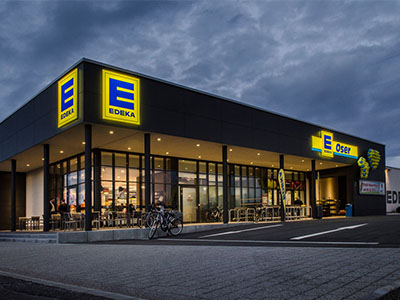 Co-operatives are associations of independent retailers (usually small supermarkets or grocery shops) that come together to compete with large chains. They do this by sharing branding, purchasing, logistics, technology and marketing, but retaining ownership and management of their shops.
They are characterised by decentralised ownership (each shop is independent) and shared decision-making among the partners. In other words, each shop or member participates in the cooperative with a voice and a vote and undertakes to follow common rules (image, assortment, suppliers, etc.).
The cooperative centralises purchases to negotiate better prices and offers its members logistics, common services, co-branding, training and technology. In addition, it operates as a non-profit collective enterprise, so profits are reinvested or shared among the members.
This model makes it possible to offer greater competitiveness compared to integrated chains, promotes the local economy, local commerce and democratic participation in decision-making. However, it is more unequal in terms of shop management, involves a risk of lack of coordination if standards are not well followed, and is dependent on the collective commitment of the partners.
Globally, this is the top 10 leading cooperatives in the world.
| Company | Country | No. of shops | Characteristics |
| EDEKA | Germany | +11.000 | Highly decentralised network, leader in Germany. |
| REWE Group | Germany | +10.000 | Retail co-operative with national strength. |
| Coop Italia | Italy | +4.000 | Strong presence in the north of the country. |
| Leclerc (E. Leclerc) | France | +750 (hyper and supermarkets) | Co-operative of retailers with a very strong brand. |
| Eroski | Spain | +1.300 | Consumer cooperative, integrated in Mondragon. |
| Covirán | Spain / Portugal | +2.800 | Retailers’ co-operative, strong in neighbourhoods and villages. |
| Système U | France | +1.500 | Union of independent retailers under a common brand name. |
| Foodstuffs | New Zealand | +700 | Supermarket co-operative (New World, Pak’nSave). |
| Migros (mixed) | Switzerland | +600 | Co-operative model with vertical integration. |
| Federated Co-operatives Ltd. (FCL) | Canada | +500 | Network of regional co-operatives that form a large centralised network. |
CENTRAL PURCHASING/DISTRIBUTION GROUPS
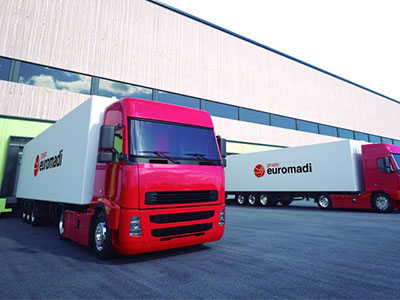 Purchasing centres or distribution groups are alliances of independent shops or regional chains that group together to negotiate jointly with suppliers, obtain better purchasing conditions and compete with the large integrated distributors. They do not directly manage shops, but support companies or cooperatives that maintain their commercial autonomy, but benefit from the collective purchasing power.
In this way, there is total independence of the sales outlets while all of them benefit from cost reductions thanks to economies of scale.
Each member of the group (shop, chain or cooperative) is legally independent, maintains its own image (although they sometimes share a brand) and benefits from the conditions negotiated by the head office. Meanwhile, the purchasing centre negotiates with suppliers on behalf of the group and can centralise logistical services, promotions, technology or marketing.
Purchasing centres or distribution groups are a strength for their members vis-à-vis suppliers and manufacturers, as they can apply strategies to negotiate competitive prices with food suppliers. It also gives them access to their own brands and a common assortment. However, there is no direct control over commercial execution and there is the possibility of conflicts of interest between members.
Globally, this is the top 10 purchasing centres in the world.
| Company | Country | No. of partners | Characteristics |
| EDEKA Zentrale AG | Germany | +11,000 shops | Combines central purchasing and cooperative functions. |
| Retail Trade Group (Ahold Delhaize) | The Netherlands | +7.000 shops | Supports multiple local chains (Albert Heijn, Delhaize, etc.). |
| AMS Sourcing B.V. | Netherlands | +100.000 shops (indirect) | Groups large European retailers for common purchasing. |
| Coopernic | Luxembourg | +20.000 shops | Alliance of European distributors (Coop Italia, E.Leclerc…). |
| EUROMADI | Spain | +16,000 points of sale | Leading distribution network in Spain, strong in own brands. |
| INTERMARCHÉ (Les Mousquetaires) | France | +1,800 shops | Although it manages its own shops, it acts as a head office for partners. |
| SUPERUNIE | Netherlands | +1,800 supermarkets | Central for 13 regional chains in the Netherlands. |
| IFA Retail Group | Spain | +11,000 shops | Spanish head office for regional chains (Bon Preu, Gadisa, etc.). |
| Associated Wholesale Grocers (AWG) | USA | +3.400 shops | Large co-operative centre for independent supermarkets. |
| Topco Associates | USA | +1,000 chains/partners | Purchasing centre for large co-operatives and chains in the USA. |
CASH & CARRY
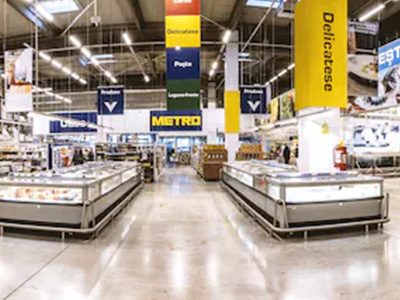 Cash & carry are self-service wholesale establishments aimed at professionals and businesses, such as bars, restaurants, hotels (HORECA channel), small retailers or self-employed. The name comes from the way they work: the customer pays cash (“cash”) and transports the goods on his own (“carry”). They are oriented towards professional buyers who need large volumes of product at competitive prices.
They sell exclusively to professionals, as registration or a customer card is required; they offer prices excluding VAT and their model is self-service in large supermarkets: customers select, load and transport the goods. They have a wide assortment, especially in food, beverages, cleaning products, household goods and catering. Their location is peripheral and logistical: with easy access and parking for large vehicles. Some incorporate delivery services (hybrid cash & carry model + delivery).
Globally, this is the top 10 leading cash and carry in the world.
| Company | Country of origin | No. of locations | Characteristics |
| METRO AG | Germany | +670 | World leader in the model; present in Europe and Asia. |
| Makro | United Kingdom / Germany | +100 (only in Europe and LatAm) | International brand of the Metro Group. |
| Costco Business Center | USA | +20 (B2B focused) | Professional variant of the giant Costco. |
| Sam’s Club | USA | +600 | Hybrid model: private and corporate members. |
| Spar Wholesale | The Netherlands | Mixed network | Wholesale supply for Spar shops and professionals. |
| GM Cash / Transgourmet | Spain / Switzerland | +400 (complete group) | Specialised in HORECA in Europe. |
| DistriClub | France | +250 | Professional model linked to Système U. |
| Booker Wholesale | United Kingdom | +170 | Subsidiary of Tesco, wholesaler to the on-trade. |
| Bidfood | South Africa / Global | +100 | B2B distributor with presence in Europe, Asia and Africa. |
| Recheio (Sonae) | Portugal | +40 | Leading Cash & Carry in Portugal, part of the Sonae group. |
PURE PLAYERS
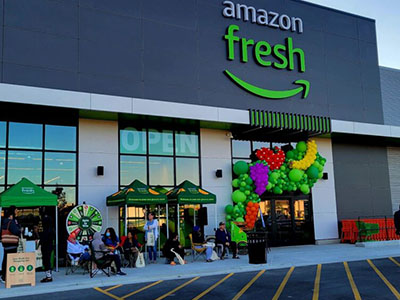 Pure players are companies that sell exclusively online, without traditional physical shops, operating through e-commerce platforms. In the food sector, these players have revolutionised the traditional model, focusing their proposal on efficient logistics, fast delivery and digital customer experience.
They have specialised logistics for home delivery, are technology and data intensive, and offer flexibility in assortment and customisation.
This model does not have physical shops open to the public, although some operate dark stores or urban distribution centres. They sell products through apps, websites or external platforms. They offer services such as home delivery in 10 minutes, 1 hour or in scheduled time slots. They also develop personalised offers and allow subscriptions or automated purchases. Some operate only in the food sector, others combine household, beauty, hygiene or pet products.
They have a high flexibility of assortment and promotions, their structural costs are lower than a network of physical shops and they allow easy digital geographic expansion. However, they are highly dependent on logistics, which is costly and complex. They have low visibility without a strong brand and difficulty in building loyalty.
Globally, these are the top 10 leading pure players in the world.
| Company | Country | Geographic scope | Characteristics |
| Amazon Fresh | USA | USA, UK, Japan, Germany… | Global leader in online grocery. Integrated with Amazon Prime. |
| Ocado | United Kingdom | UK + global alliances | Pioneer in technology and automation. Supplies other chains. |
| FreshDirect | USA | East Coast USA | Specialises in fresh and local produce. |
| Ulabox | Spain | Spain | First 100% online supermarket in Spain. |
| Instacart | USA | USA, Canada | Logistics intermediary between physical shops and the end customer. |
| Getir | Turkey | Europe, USA, Middle East | Ultra-fast deliveries (10 minutes). Focus on convenience. |
| Gorillas | Germany | Europe | Urban dark stores and deliveries in 10-15 minutes. |
| BigBasket | India | India | Leading Indian e-grocery. Now owned by Tata Group. |
| MissFresh | China | China | Mobile app with deliveries from urban centres. |
| Dingdong Maicai | China | China | Focus on fresh produce. Own production + logistics model. |
HYBRID / OMNICHANNEL MODELS
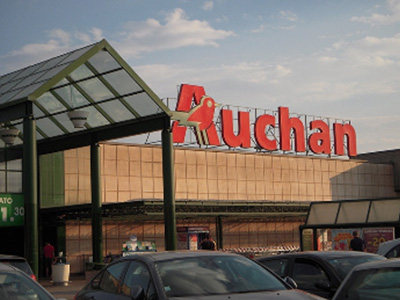 Hybrid models are those that combine physical presence (traditional shops) with online sales, strategically integrating both channels to improve customer experience, operational efficiency and loyalty.
These models seek to take advantage of the best of digital pure players (convenience, speed, personalisation) and physical retailers (trust, direct experience, immediate assortment).
They are characterised by offering click & collect and home delivery; and by having their own apps. In addition, they allow the integration of inventories and promotions in all channels.
They are fully omni-channel: the customer can start shopping in one channel and finish it in another. This is possible thanks to the integration of data and the use of CRM to personalise offers and promotions.
This model offers greater customer coverage, allows multi-channel loyalty, facilitates logistical efficiency by taking advantage of the existing network and allows competition with pure players without abandoning the physical core. However, it involves high digitalisation and technology costs and requires complex internal coordination. Moreover, there is a risk of cannibalisation between channels.
Hybrid models are set to dominate the future of food retailing, as they are the most adaptable to consumer expectations. The key to success lies in channel consistency, logistical efficiency and personalisation of the shopping experience.
Globally, this is the top 10 of the world’s leading hybrid models.
| Company | Country | Features |
| Walmart | USA | Advanced omnichannel model, with in-store deliveries, own marketplace and strong digital investment. |
| Carrefour | France | European leader in digital integration: apps, e-commerce, in-store pick-up and delivery. |
| Tesco | United Kingdom | Extensive online channel, click & collect, home delivery and digitisation of assortment. |
| Aldi Süd / Nord | Germany | Progressive development of online sales and apps in key markets such as UK and US. |
| Auchan | France | Phygital strategy (physical + digital), strong in Eastern Europe and Asia. |
| Kroger | USA | Partnership with Ocado for online automation, click & collect, own apps. |
| Albertsons | USA | Investment in delivery, personalised apps, marketplace and hybrid services. |
| El Corte Inglés | Spain | Pioneer in omnichannel in Spain. Integrated App, online sales and physical points of sale. |
| Mercadona | Spain | Evolving hybrid model, with revamped online shop and network of logistics hives. |
| Casino Group | France | Mobile applications, shop automation, ecommerce in Monoprix and Franprix. |
 The structure of food retailing is evolving at the pace of social, technological and economic change. Analysing how the different commercial formats, sales channels and business models combine allows us to better understand companies’ strategies and to anticipate new dynamics in the relationship with the consumer. In an increasingly competitive and digitalised context, knowing these keys is vital for professionals in the sector.