


12 Aug The world’s top 10 in the mass consumption retail sector
The Mass Consumption Retail refers to the set of companies and retail chains that market mass-consumed products on a large scale. It is a key sector in the global economy, focused on the commercialization through supermarkets, hypermarkets, convenience stores, and e-commerce platforms that distribute essential goods such as food, beverages, hygiene products, cleaning items, and other everyday necessities.
In this post, we explore the Mass Consumption Retail ecosystem and the trends transforming it through the 10 leading global companies in the sector, their strategies, strengths, and areas for improvement.
The companies in this top 10 of Mass Consumption Retail have in common that they have developed differentiated strategies to remain competitive in a changing environment marked by digitalization, logistics efficiency, sustainability, and new trends in conscious consumption. And all of this while competing with each other in the battle to ensure the availability of essential products at affordable prices through a varied and consistent offering.
1.Walmart (USA)
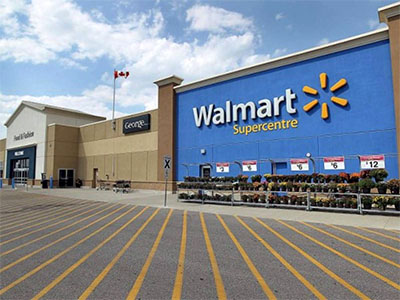 Walmart is the undisputed leader in global retail with a global network of stores that spans thousands of locations and a strong focus on competitive pricing. Its business model combines physical retail with an increasing digital presence, allowing it to establish itself as a benchmark in omnichannel retailing.
In recent years, Walmart has intensified its focus on e-commerce and fast delivery, with acquisitions and improvements in its logistics infrastructure. Its innovation strategy includes the use of artificial intelligence and automation in its warehouses and distribution centers, enabling it to optimize operations and enhance the customer experience.
Its strengths include its wide network of stores, the ability to offer low prices thanks to its scale, and constant investment in technology. However, it faces challenges such as the need to further strengthen its e-commerce position against rivals like Amazon.
2.Amazon (USA)
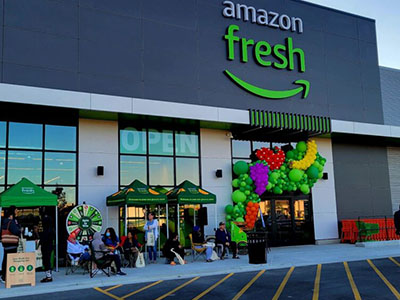 Amazon has revolutionized the retail industry thanks to its dominance in e-commerce and focus on technological innovation. With its highly efficient logistics, use of artificial intelligence to personalize the shopping experience, and a subscription model through Amazon Prime, the company has managed to differentiate itself and lead the digital market.
In its recent strategy, Amazon has expanded its presence in physical retail with Amazon Fresh and the acquisition of Whole Foods, aiming to combine the best of both worlds and capture a larger share of the mass consumption market. It is also investing in warehouse automation and ultrafast delivery innovation.
Its main strengths include its leadership in e-commerce, an advanced logistics network, and the ability to personalize the shopping experience using big data. However, it faces challenges such as its reliance on third parties for the sale of mass consumption products, which could affect its business model in the future.
3.Costco (USA)
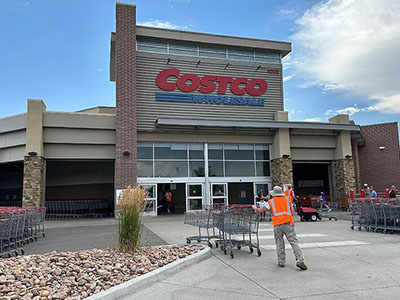 Costco has built its success on a membership model that guarantees a loyal and recurring customer base. Its strategy focuses on selling products in large volumes at low prices, allowing it to maintain a narrow margin but with high inventory turnover.
One of its key competitive advantages is direct negotiation with suppliers, which allows it to offer highly competitive prices and exclusive products. Additionally, its focus on operational efficiency and warehouse shopping experience has solidified its market position.
However, Costco faces challenges such as its smaller presence in e-commerce, an area where competitors have moved more quickly. Also, its international expansion has been more limited compared to other giants in the sector. This could, however, present an opportunity in the future.
4.Schwarz Group (Lidl & Kaufland) (Germany)
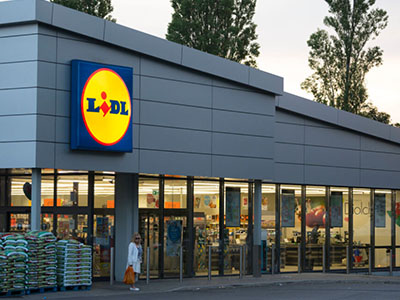 Schwarz Group is the German conglomerate that owns Lidl and Kaufland, two of the most important retail chains in Europe. Lidl has established itself as a benchmark in the discount model, offering high-quality products at low prices, while Kaufland operates under a hypermarket format with a wider variety of products.
The group’s strategy focuses on operational efficiency and international expansion, with a strong focus on sustainability and digitalization. Lidl, in particular, has stood out for its private-label model, allowing it to offer competitive prices without relying on major global brands.
Its strengths include low costs, efficient operations, and rapid expansion in Europe and the U.S. At the same time, it faces challenges such as diversifying its store formats and its business model centered on private labels, which also presents an opportunity by keeping costs and final prices low for consumers.
5.Aldi (Germany)
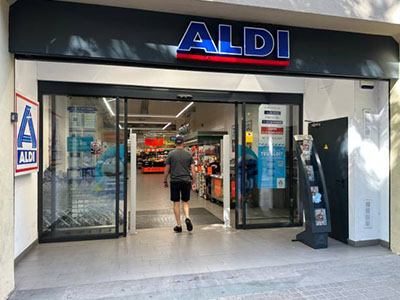 Aldi has solidified its global presence through a discount model that prioritizes efficiency and low prices without compromising on quality. With an aggressive expansion strategy in key markets like the U.S. and Europe, the chain has managed to differentiate itself through a simplified offering and private-label products.
One of its strengths is its highly efficient operation, with an optimized cost structure and high inventory turnover. Additionally, Aldi has invested in sustainability, reducing plastics and promoting renewable energy in its stores.
However, it faces challenges in its limited e-commerce presence and expansion into markets like Asia and LATAM, where its model still has room to grow.
6.Carrefour (France)
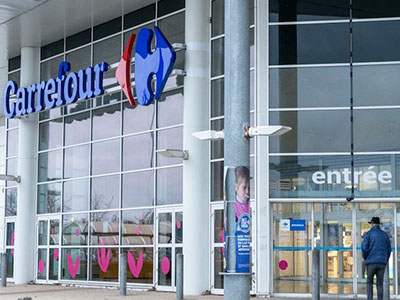 Carrefour is one of the giants of distribution in Europe and has focused its efforts on digital transformation to remain competitive in a highly dynamic market. It aims to improve the shopping experience both online and in physical stores. Additionally, sustainability is an increasing priority, and the company has launched initiatives to promote the circular economy, such as reducing waste and improving product traceability.
Carrefour is distinguished by its diversified global presence, which allows it to adapt to the different needs of the markets in which it operates. Furthermore, its multi-format business model, ranging from hypermarkets to convenience stores, gives it flexibility to capture different consumer segments.
Despite its strong presence, Carrefour faces fierce competition in several of its key markets, especially in Europe, where profit margins in hypermarkets have been challenging due to competition from discount models and rising operational costs.
7.Tesco (UK)
 Tesco, the largest retailer in the UK, has focused its strategy on strengthening its omnichannel presence and expanding its e-commerce offerings, with special attention to reinforcing its digital platform and home delivery service. The company is also diversifying its services, such as offering financial services, which allows it to create a deeper relationship with its customers.
One of Tesco’s main strengths is its high level of technology applied in its operations, which has allowed it to optimize its distribution network and enhance the customer experience. Additionally, its strong supplier network gives it access to high-quality products, while its flexible store format allows it to cater to different market segments.
Despite its strong presence in the UK, Tesco is highly dependent on the British market, which makes it vulnerable to economic and regulatory changes in the country. Moreover, the company faces challenges in its operations outside the UK, where competition is fierce and market conditions are different, requiring constant adaptation of its business model.
8. 7-Eleven (Japan)
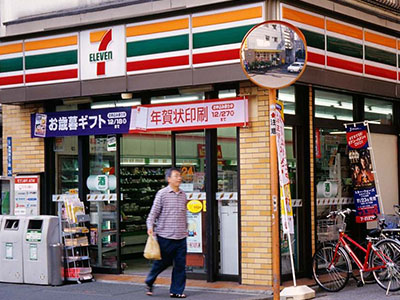 7-Eleven is a global leader in the convenience store model, and its success lies in the ubiquity of its locations and its ability to adapt to local needs. The company has been expanding its international presence, with a particular focus on the Asian region and markets like the United States. It is also investing in digitalization, offering self-service options and improving its online ordering platform to meet the convenience demand of modern consumers.
One of 7-Eleven’s major strengths is its highly strategic locations, with stores open 24 hours a day in high-traffic areas. This model, combined with an efficient franchise system, has allowed for rapid global expansion. Furthermore, its ability to adapt to local demands is a key success factor, enabling it to offer products and services tailored to the preferences of consumers in different regions.
The dependence on Asian markets remains one of 7-Eleven’s areas for improvement, as its presence outside of Asia is more limited. Furthermore, it lags behind other players in the industry, like Amazon, in offering a fully digital shopping experience.
9.Ahold Delhaize (Netherlands)
 Ahold Delhaize, a retail giant encompassing brands like Albert Heijn and Delhaize, has focused its strategy on integrating technology to improve the customer experience and facilitate online shopping. The company is expanding its e-commerce presence, offering home delivery and in-store pickup options. At the same time, it is heavily investing in sustainability, with projects that include reducing its carbon footprint and promoting local and sustainable products.
Ahold Delhaize stands out for its strong presence in Europe and the United States, allowing it to leverage economies of scale and a broad supplier network. Moreover, its focus on private labels has been one of its key strategies, helping to increase loyalty and improve margins.
One of Ahold Delhaize’s main areas for improvement is its expansion outside of key markets. Although the company has a strong presence in Europe and the U.S., its expansion into other regions is limited. Additionally, competition in Europe is extremely intense, which puts pressure on its margins and its ability to maintain competitiveness.
10.Target (USA)
 Target stands out for its large-format stores, which offer a differentiated shopping experience that integrates both everyday consumer products and fashion and technology items. The company is expanding its digital presence and strengthening its e-commerce, aiming to compete more effectively in the online market. Additionally, Target has focused on product exclusivity, offering private labels and collaborations that cannot be found in other retailers.
One of Target’s main strengths is its ability to create an engaging shopping experience through effective marketing and a strong loyalty strategy.
Although Target has had considerable success in the U.S. market, it faces growing competition in online retail, especially from companies like Amazon and Walmart. Additionally, its dependence on the U.S. market may pose a risk, as changes in the economy or consumer preferences in the country could significantly impact its results.
 Now you have a comprehensive view of Mass Consumption Retail and a contextualization of the development lines of the leading retailers. So, you can now identify which distributors represent a commercial opportunity for your business and detect growth pathways by understanding their strategies and priorities related to their suppliers.