

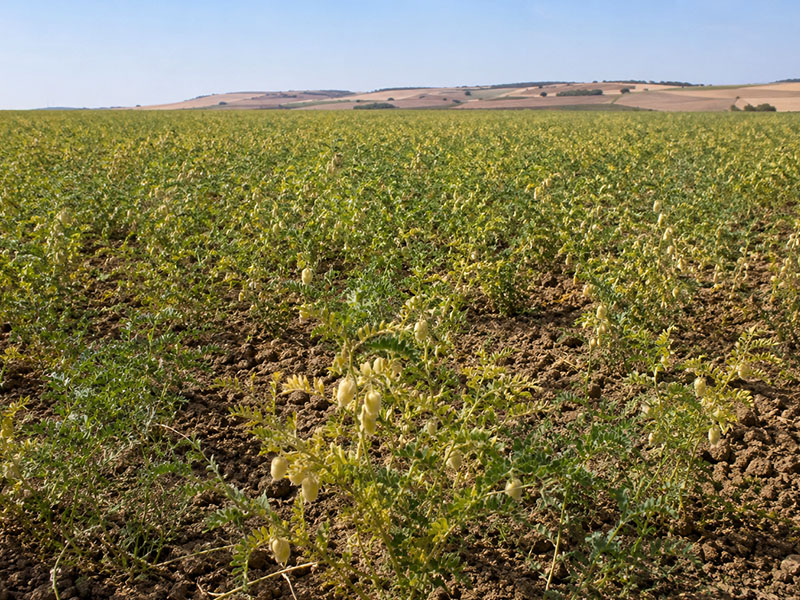
01 Jun How chickpeas are produced: varieties, harvest calendars and leading producing countries
Chickpeas are one of the oldest and most widely traded legumes in the world. Their presence in international supply chains, canning industries, ready-meal manufacturers and retail brands has made them a strategic raw material within the global pulses market.
For professionals and B2B companies in the agri-food sector, understanding the origin, commercial varieties and geographical distribution of chickpea cultivation is essential. Only by doing so can businesses anticipate sourcing trends, plan procurement strategies and better understand the evolution of international markets.
The Origin of Chickpeas
Chickpeas belong to the species Cicer arietinum L. and are among the earliest legumes domesticated by humans. Archaeological evidence places their cultivation in the Fertile Crescent and the Middle East more than 8,000 years ago. Specialist research suggests that chickpeas were already being cultivated in Neolithic settlements located in present-day Turkey and Syria around the eighth millennium BC.
From this region of origin, chickpea cultivation gradually spread throughout the Mediterranean Basin, North Africa, Persia and Central Asia, the Indian subcontinent and, later, Latin America and Oceania.
The expansion of the Roman Empire played a decisive role in the spread of chickpeas across Mediterranean Europe. Later, Arab trade routes consolidated their presence throughout North Africa and the Iberian Peninsula.
For centuries, chickpeas were primarily grown as a dryland crop in semi-arid regions due to their strong adaptation to challenging climatic conditions. This characteristic remains a key factor in the world’s major chickpea-producing regions today.
Main Chickpea Varieties
Unlike many other pulses, chickpeas have maintained a strong cultural connection to specific markets. This has historically influenced varietal preferences and international trade flows.
Varietal diversity is one of the factors that most strongly influences international trade, industrial processing and consumer preferences. Although dozens of local ecotypes and varieties exist worldwide, the global market is primarily divided into two major commercial categories: Desi chickpeas and Kabuli chickpeas.
From these two categories, numerous varieties have been developed, each with specific characteristics regarding size, colour, texture, cooking performance and industrial suitability.
For the B2B food industry, understanding these differences is essential when defining purchasing strategies, segmenting products and selecting origins according to specific commercial applications.
Desi Chickpeas
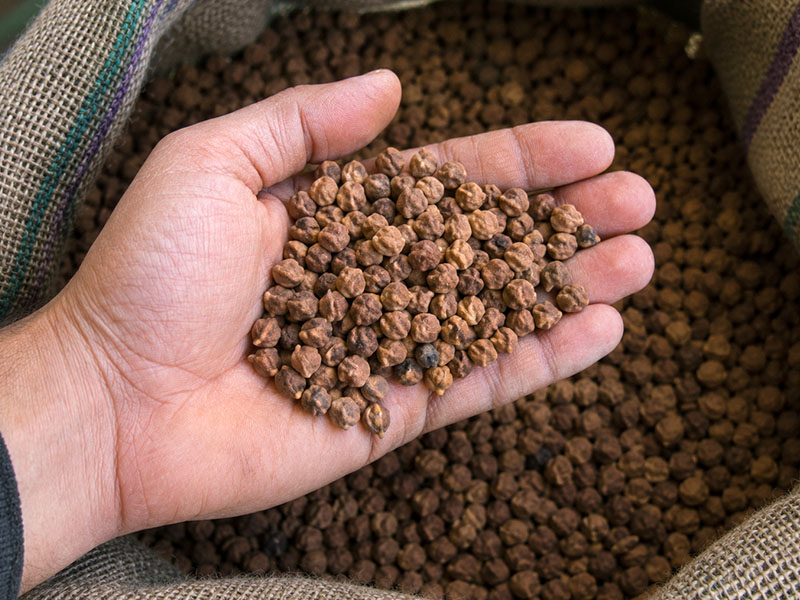 Desi chickpeas are the oldest and most widely cultivated chickpea variety in the world. They account for approximately 80% to 85% of global production.
They are characterised by:
-Small to medium grain size.
-Dark brown or reddish colouring.
-Thick seed coat.
-More angular shape.
Their cultivation is particularly dominant in India, Pakistan, Bangladesh, Ethiopia and Australia.
From an industrial perspective, Desi chickpeas are mainly used for lour production, pocessed food products, traditional Asian consumption an snack manufacturing.
India accounts for the largest share of both production and consumption of this chickpea type.
Kabuli Chickpeas
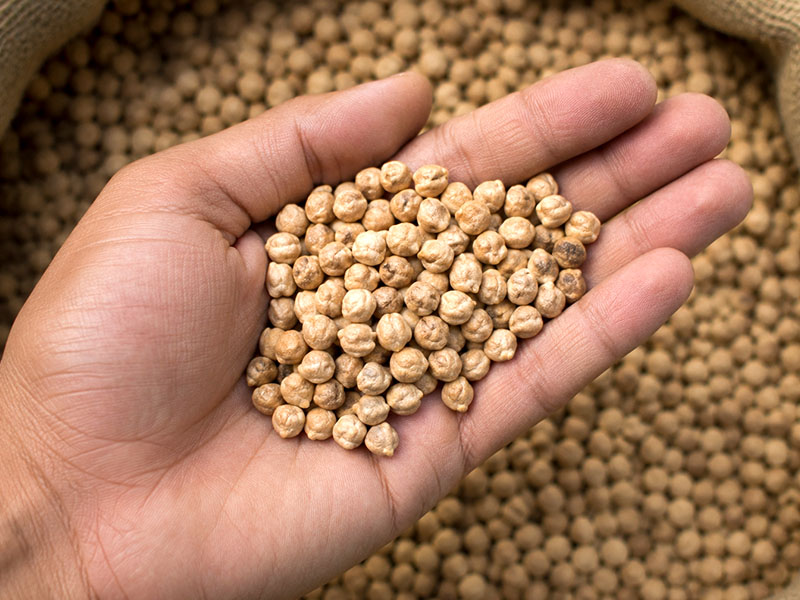 Kabuli chickpeas are the most widely recognised variety in Europe and throughout much of the Mediterranean region.
Their main characteristics include:
-Larger grain size.
-Beige or cream colouring.
-Thin seed coat.
-Rounded shape.
Although they represent a smaller proportion of global production, Kabuli chickpeas command higher commercial value in many Western markets due to their use in canned products, hummus, ready meals, foodservice applications an oremium retail products.
Kabuli chickpeas dominate production in Spain, Turkey, Mexico, the United States, Canada and much of the Mediterranean region.
International demand for this variety has increased significantly over the past decade, driven by the growing popularity of Mediterranean foods and plant-based prepared meals.
Other Commercial Chickpea Varieties
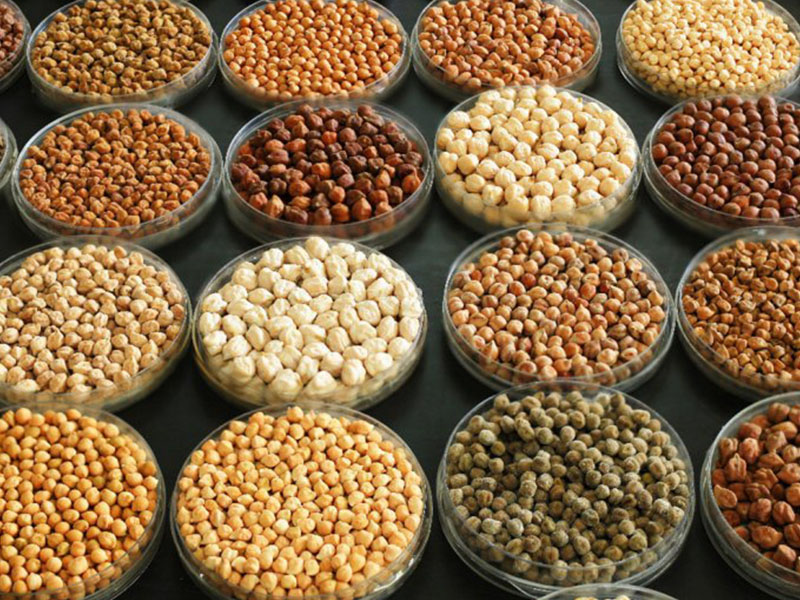 In addition to the two main chickpea families (Desi and Kabuli), numerous ecotypes and regional varieties exist. In fact, more than 3,000 cultivated varieties and nearly 200 wild chickpea species have been identified. However, only a limited number have significant commercial relevance.
The most recognised commercial varieties include Pedrosillano, Blanco Lechoso, Castellano, Gulabi and, to a lesser extent, black and green chickpeas.
Pedrosillano Chickpeas
Traditionally grown in Spain, particularly in the region of Castilla y León.
Characteristics:
-Small grain size.
-Firm texture.
-High uniformity.
Highly valued for premium canned products and traditional Spanish stews.
Blanco Lechoso Chickpeas
Considered one of Spain’s most prized chickpea varieties.
Characteristics:
-Large grain size.
-Very light colour.
-High water absorption capacity.
Widely used in the canning industry and the horeca sector.
Castellano Chickpeas
A medium-sized variety widely cultivated throughout Spain.
Characteristics:
-Spherical shape.
-Rough surface.
-Good agronomic resistance.
Gulabi Chickpeas
Originating from South Asia.
Characteristics:
-Medium grain size.
-Light colour.
-Frequently used in regional export markets.
Black and Green Chickpeas
Cultivated on a limited scale in parts of India and Central Asia.
Although still niche products, these varieties are gaining attention in specialised and premium markets.
 The World’s Leading Chickpea-Producing Countries
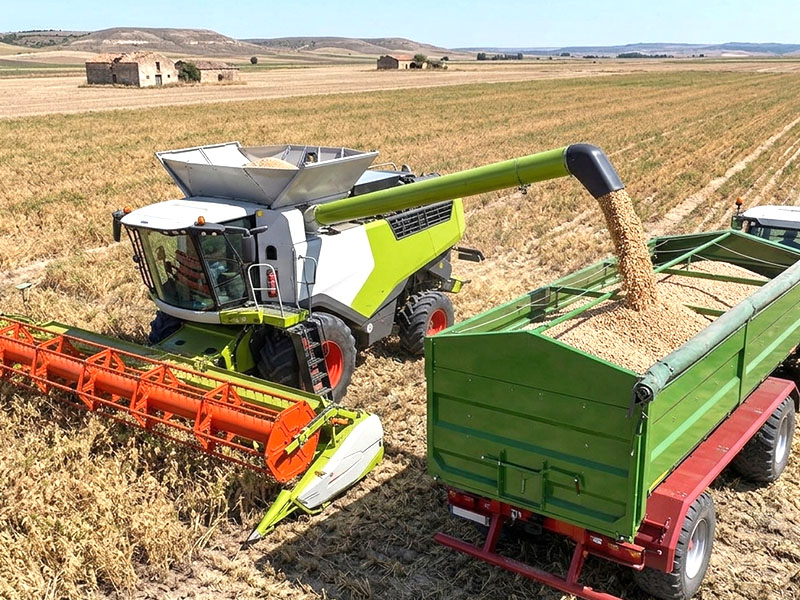 The World’s Leading Chickpea-Producing Countries
Global chickpea production is concentrated in countries with semi-arid climates, mild winters, low humidity during maturation and a long agricultural tradition linked to pulse cultivation. However, each producing region has unique characteristics regarding varieties grown, agricultural calendars, export capacity and market orientation.
While some countries focus primarily on meeting domestic demand, others have specialised in export markets and international supply for the food industry. Understanding which countries lead production, when harvests take place and which chickpea types are grown is essential for understanding the dynamics of the global market.
India
India is the undisputed global leader in chickpea production, accounting for more than 60% of total world output. Annual production is estimated at approximately 11.9 million tonnes.
Sowing: October–November
Harvest: February–April
Key producing regions include:
-Madhya Pradesh
-Maharashtra
-Rajasthan
-Uttar Pradesh
India mainly produces Desi chickpeas for domestic consumption, although it also participates in selective export markets.
For international B2B operators, the performance of the Indian monsoon remains one of the most influential factors affecting global chickpea markets.
Australia
Australia has established itself as one of the world’s most important chickpea exporters.
In 2024, Australian production reached approximately 2.26 million tonnes according to FAOSTAT-based estimates.
Sowing: May–July
Harvest: October–December
Australia stands out for highly mechanised farming systems, consistent quality an strong export orientation.
Its main export destinations include India, the Middle East, Europe and Southeast Asia.
Australian production includes both Desi and Kabuli varieties.
Turkey
Turkey has long been one of the Mediterranean region’s leading chickpea producers.
Production reached approximately 575,000 tonnes in 2024.
Sowing: March–April
Harvest: July–August
Turkey plays a strategic role in the European market thanks to geographic proximity and high-quality Kabuli varieties.
Its position as a bridge between Europe and Asia.
Ethiopia
Ethiopia represents one of Africa’s most significant growth stories in chickpea production.
Production reached approximately 444,000 tonnes in 2024.
Sowing: June–July
Harvest: October–December
Ethiopia stands out for:
-High yields.
-Expansion of Kabuli cultivation.
-Growing export activity.
Its proximity to Middle Eastern markets has strengthened its role in regional trade.
Myanmar
Myanmar has become an increasingly important player in Asia’s chickpea sector.
Annual production exceeds 460,000 tonnes.
Sowing: October–November
Harvest: February–March
A significant proportion of production is destined for regional export markets.
Pakistan
Pakistan has a long tradition of cultivating Desi chickpeas.
Sowing: October–November
Harvest: March–April
Climate variability and water availability continue to be major factors affecting production stability.
Mexico
Mexico is one of the world’s leading exporters of large-calibre Kabuli chickpeas.
Annual production is estimated at approximately 170,000 tonnes.
Sowing: November–December
Harvest: April–May
Mexican chickpeas are primarily exported to Europe, The Middle East and North America.
Their large size and high uniformity make them particularly attractive for premium industrial applications.
Russia and Central Asia
Russia has significantly expanded its chickpea cultivation area over the past decade.
Sowing: April–May
Harvest: August–September
Growth has been driven by agricultural diversification, rising exports and demand from Middle Eastern and Asian markets.
Kazakhstan is also emerging as an increasingly important producer within the region.
Canada and the United States
Canada and the United States specialise primarily in high-quality Kabuli chickpeas.
Sowing: April–May
Harvest: August–September
Both countries are recognised for:
-Highly mechanised agriculture.
-Strong traceability systems.
-High export quality standards.
Canada has become particularly relevant in both European and North American markets.
Spain and the European Market
Although Spain’s production volumes are smaller than those of the world’s leading producers, the country maintains a strong reputation for traditional chickpea varieties.
Sowing: Winter or spring, depending on the region.
Harvest: July–August
Main producing regions include Castilla y León, Andalucía, Castilla-La Mancha and Extremadura.
Spain is particularly recognised for:
-Premium varieties.
-Traditional quality labels.
-Canning industry expertise.
-Gourmet market positioning.
Global Chickpea Production
 Global chickpea production continues to expand, driven by growing demand for plant-based proteins, the expansion of Mediterranean cuisine, the popularity of hummus and prepared meals, and increasing retail consumption worldwide.
Today, the market shows a clear distinction between high-volume production and premium production focused on quality and traceability.
For B2B operators, this means an increasing segmentation of supply according to grain size, uniformity, origin, logistical reliability, certifications and industrial processing capabilities.
In the international chickpea market, origin is no longer simply a geographical consideration. For manufacturers, distributors and brands, the country of origin directly affects key factors such as:
-Supply stability.
-Availability calendars.
-Product uniformity.
-Logistics costs.
-Climate-related risks.
-Industrial compatibility.
 As a result, many food industry companies now adopt multi-origin sourcing strategies to reduce risk and ensure operational continuity throughout the year. This approach allows businesses to diversify supply risks while adapting more effectively to the specific requirements of different channels, industries and destination markets.