


11 Aug Which maritime ports are the most important in the world for food export?
Maritime ports are some of the most important infrastructures when it comes to exporting foodstuff. They’re essential to this type of international trade because they enable the transfer of goods between ships and ground transport. With good road and rail connections, they facilitate internal goods transport. And they do so all while minimising loading and unloading times thanks to efficient procedures made even easier by advanced technologies.
Along with their connectivity, maritime ports are vital to the world food trade because they have the capacity to handle large cargo volumes. Plus, their facilities are appropriate for food storage and handling. Such characteristics must be taken into account by import and export companies when negotiating means of transport just as the incoterms for determining each of the parties’ obligations as well as all the necessary trade documentation, transport documentation and customs documentation.
But, which maritime ports are the most important in the world for food export? What follows are descriptions of the most important ports for exporting and importing foodstuff. They are strategically located along the main trade routes and can handle large volumes of agricultural and food products.
Port of Shanghai, China
The Port of Shanghai is the largest in the world in terms of cargo volume. With the capacity to handle more than 40 million TEUs per year, it’s a crucial hub for the global food trade.
It’s got advanced refrigerated storage facilities and areas dedicated to food handling. It’s connected to an excellent ground and rail transport network which facilitates the distribution of food within China and to other destinations. Moreover, it has implemented automation technologies and advanced management systems to enhance its operational efficiency.
Port of Rotterdam, the Netherlands
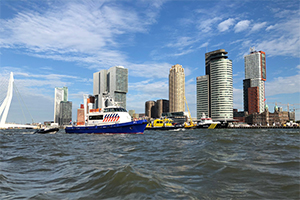 The Port of Rotterdam is renowned for its operational efficiency and for being a highly automated port. An extensive road, rail and boat transport network connects the port to all of Europe.
As the largest port in Europe, it is an important point of entry for food to the continent. It features spacious refrigerated storage facilities and has the capacity to handle large volumes of perishable goods.
Port of Los Angeles, the United States
The Port of Los Angeles is the largest container port in the United States and performs a crucial role in importing foodstuff into the country. It’s equipped with modern refrigerated container handling and storage facilities.
Good connections to the main rail and road networks facilitate internal distribution. As concerns sustainability, it has implemented initiatives to reduce its environmental impact, such as the use of clean energy and green technologies.
Port of Singapore
The Port of Singapore is one of the most active in the world and is known for its efficiency and advanced infrastructure. It has got next-generation facilities for food storage and handling, and is strategically located along one of the most heavily-trafficked maritime routes with excellent ground connections.
It’s heavily focused on innovation and automation to enhance its operational efficiency.
Port of Hamburg, Germany
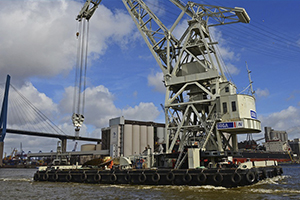 The Port of Hamburg is one of the most important in Europe, specially when it comes to the food trade. It’s got modern refrigerated storage facilities and advanced cargo handling capabilities.
The excellent ground and rail transport networks make for easy food distribution throughout Europe. What’s more, it’s committed to sustainability. It engages in sustainable practices and emissions reductions initiatives.
Port of Santos, Brazil
This is the main port in Brazil for exporting agricultural products like soybeans, coffee, sugar and meat. The Port of Santos plays a crucial role in exporting foodstuff to Asia, Europe and North America. Brazil is one of the largest food exporters in the world, and Santos is the country’s most important logistics centre.
Port of New Orleans, the United States
Known for exporting grains such as corn, wheat and soybeans, it’s a key centre for the export of American agricultural products. It’s an important point of exit for products from the US Ag Belt going to Europe, Latin America and Asia.
Port of Buenos Aires, Argentina.
This is the main port in Argentina for the export of agricultural products, especially soybeans, corn, meat and wheat. Argentina is one of the largest exporters of agricultural products in the world, and Buenos Aires is the logistics centre for trade with Europe, Asia and North America.
Port of Paranaguá, Brazil
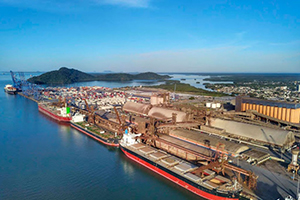 Specialising in the export of soybeans, corn, meat and sugar, Paranaguá is one of the most important ports in Brazil for the export of agricultural products. It is highly relevant to markets in Asia, particularly China, and in Europe.
Port of Le Havre, France
This port handles a large quantity of food products, specially wine, dairy products and other agricultural products from France, one of the main food exporters in the world. The Havre is crucial to food distribution throughout Europe and for exporting to international markets.
Port of Durban, South Africa
It’s one of the most important ports for importing and exporting foodstuff in Africa. South Africa exports a variety of agricultural products, including citrus fruits, wine and sugar. Durban is connected to the main markets in Asia and Europe, and also operates as a distribution hub for food products to the rest of the African continent.
Port of Jebel Ali, Dubai, United Arab Emirates
Jebel Ali is the largest port in the Gulf region and important for the redistribution of food to the Middle East, Africa and Asia. It handles major volumes of imported processed and fresh foods. Operating as a logistics centre for the distribution of food in the Gulf region, it supplies countries that heavily depend on imported food.
Port of Qingdao, China
This is an important port for the import of agricultural products, specially soybeans and meat. Also handling the export of seafood and other processed foods, it is mainly linked to markets in South America, North America and other Asian countries.
 With great room for improvement, such as the possibility of expanding their infrastructure to increase their cargo handling capability and enhance competitiveness, all indications are that maritime ports will continue to be essential to the world’s food supply chain.
However, in order to be the top choice among the various means of transport for food exports, maritime ports must overcome a series of challenges, such as climate change, regulations and standards and the congestion of their infrastructures. And those things are not easily controlled by import companies.